
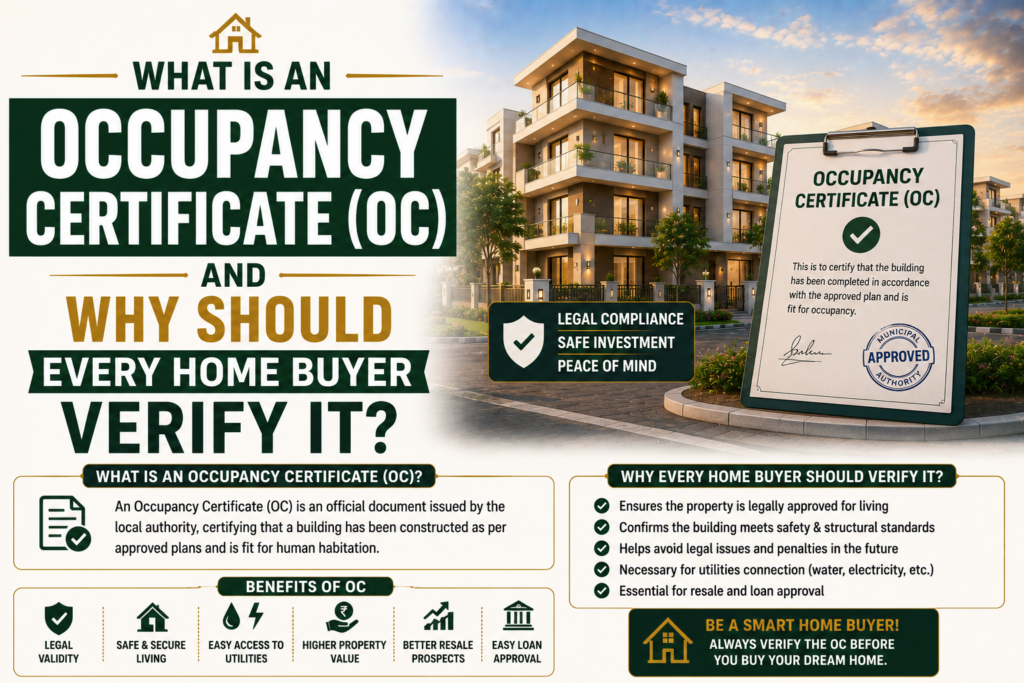
Buying a property is one of the biggest financial decisions a person makes. Along with checking the location, price, and amenities, buyers should also verify important legal documents. One such essential document is the Occupancy Certificate (OC).
An Occupancy Certificate confirms that a building has been constructed according to approved plans and is considered fit for occupation by the competent authority.
What Is an Occupancy Certificate?
An Occupancy Certificate is a legal document issued by the local municipal authority or development authority after inspecting a completed building. It certifies that the property complies with approved building plans and applicable safety and civic infrastructure requirements.
Why Is an OC Important?
1. Confirms Legal Occupancy
The certificate indicates that the building has received permission for occupation from the competent authority.
2. Helps Obtain Utility Connections
Water, electricity, and sewage connections often require an Occupancy Certificate or related approvals.
3. Useful for Home Loans and Resale
Banks and future buyers may ask for the OC during loan processing or resale transactions.
4. Provides Buyer Confidence
Verifying the OC helps buyers ensure that the property has completed the required approval process.
Occupancy Certificate vs Completion Certificate
Occupancy Certificate | Completion Certificate |
|---|
Allows occupation of the building | Confirms construction is completed as per approved plans |
Issued after inspection for habitability and compliance | Issued after construction completion |
Important before taking possession | Important for project completion records |
How Can Buyers Verify an OC?
Before taking possession, buyers should:
Ask the builder or seller for a copy of the Occupancy Certificate.
Verify the document with the issuing municipal authority or development authority.
Check the project status on the relevant RERA portal, where applicable.
Common Mistakes Buyers Make
Taking Possession Without an OC
Many buyers move into a property assuming the certificate will be issued later. This can create legal and administrative complications.
Relying Only on Verbal Assurances
Always request a physical or digital copy of the certificate instead of depending solely on verbal confirmation.
Ignoring Other Legal Documents
The OC should be checked along with the Sale Deed, Encumbrance Certificate, approved plans, and other property records
Documents Buyers Should Also Verify
Sale Deed
Title documents
Encumbrance Certificate
Approved building plans
Completion Certificate
Property tax records
Conclusion
An Occupancy Certificate is one of the most important documents a home buyer should verify before taking possession of a property. It confirms that the building complies with approved plans and is legally fit for occupation according to the competent authority. Before making the final payment or moving in, always verify the OC along with all other essential property documents.