
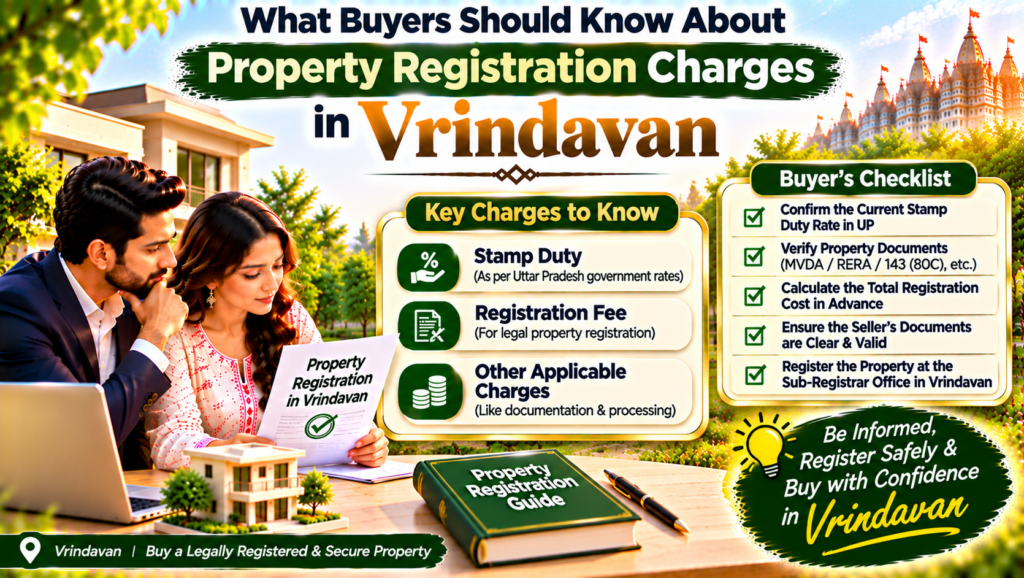
Buying property in Vrindavan involves more than paying the agreed property price. Buyers should also understand the additional expenses involved in legally registering the property in their name.
Property registration is an important part of the purchase process because it records the transaction with the appropriate government registration authority. Depending on the property type and transaction, buyers may need to account for stamp duty, registration fees and other documentation-related expenses.
Understanding property registration charges in Vrindavan before making a purchase can help buyers prepare their budget and avoid unexpected financial surprises.
1. What Are Property Registration Charges?
Property registration charges are expenses associated with officially registering a property transaction with the relevant government authority.
These expenses generally include:
Stamp duty
Registration fees
Applicable documentation expenses
Other transaction-related charges, where applicable
The exact amount depends on the applicable state rules, property details and transaction circumstances.
Buyers should obtain the latest applicable charges from the relevant registration authority before completing the transaction.
2. Understand Stamp Duty Before Buying Property
Stamp duty is a government tax payable on certain property transactions.
It is an important part of the property purchase process and should be included in the buyer’s overall budget.
Before paying stamp duty, understand:
The applicable stamp duty rate
The valuation basis used for calculation
The property transaction value
Whether any concessions or special provisions apply
The applicable payment procedure
Stamp duty rules and rates can change. Buyers should verify the current requirements through official Uttar Pradesh government sources rather than relying on old online information.
3. What Is the Property Registration Fee?
A registration fee is charged for registering the relevant property document with the government registration office.
The fee and applicable calculation method should be verified before the registration appointment.
Buyers should confirm:
Current registration fee rules
Applicable fee calculation
Required payment method
Payment receipt requirements
Any applicable limits or conditions
Keep proof of every government payment made during the registration process.
4. Understand the Difference Between Stamp Duty and Registration Fees
Stamp duty and registration fees are separate components of the property registration process.
| Particular | Meaning |
|---|---|
| Stamp Duty | Government tax applicable to the property transaction |
| Registration Fee | Fee for registering the relevant document |
| Documentation Expenses | Applicable costs for preparing and processing documents |
| Other Charges | Additional expenses, if applicable to the transaction |
Buyers should calculate these expenses separately instead of treating them as one combined amount.
5. Check the Property Valuation Before Registration
Property valuation is an important consideration when calculating applicable registration expenses.
The amount used for stamp duty and registration calculations may depend on the applicable valuation rules and the property’s transaction details.
Before proceeding, check:
Agreed purchase price
Applicable government valuation or circle rate
Property category
Location of the property
Relevant valuation rules
Do not assume that registration expenses will always be calculated only on the price agreed between the buyer and seller.
Confirm the correct calculation basis with the relevant authority or a qualified property professional.
6. Consider Additional Documentation Expenses
Apart from government charges, buyers may also incur expenses while preparing and completing property documentation.
Depending on the transaction, these may include:
Legal consultation fees
Document drafting charges
Photocopying and document preparation
Professional verification expenses
Other applicable service charges
Ask for a clear breakdown of these expenses before making payments.
7. Prepare a Complete Property Purchase Budget
Buyers should calculate the overall purchase cost rather than focusing only on the property’s advertised price.
A practical budget may include:
Agreed property purchase price
Applicable stamp duty
Registration fees
Legal consultation expenses
Documentation-related expenses
Other applicable transaction costs
Keeping a separate budget for registration-related expenses can make financial planning easier.
8. Verify the Required Documents Before Registration
Proper documentation is essential for completing a property transaction.
The documents required may vary depending on the property type and transaction.
Common documents and details to verify include:
Sale deed or relevant transfer document
Identity and address proof of the parties
Property ownership documents
Previous title documents, where applicable
Property description and identification details
Applicable permissions and approvals
Required photographs and other supporting documents
Ask the relevant Sub-Registrar Office or a qualified property lawyer for the complete document checklist applicable to your transaction.
9. Understand the Property Registration Process
The registration process generally involves preparing the relevant document, arranging applicable payments and completing the required formalities before the registration authority.
A typical process includes:
Step 1: Document Preparation
Prepare the relevant sale deed or transfer document with accurate property and buyer-seller details.
Step 2: Property Verification
Review the ownership records, property description and relevant supporting documents.
Step 3: Charge Calculation
Confirm the applicable stamp duty and registration fees under current rules.
Step 4: Payment of Applicable Charges
Complete the required government payments through the authorised payment process and retain receipts.
Step 5: Registration Appointment
Complete the required formalities at the appropriate registration office.
Step 6: Document Collection
Collect the registered document and verify the recorded details.
The exact procedure may vary according to the transaction and the applicable government process.
10. Check the Registered Document After Completion
After registration, carefully review the document received from the registration authority.
Check:
Buyer and seller names
Property identification details
Plot or property measurements
Transaction value
Document registration details
Any relevant schedule or annexure
If you identify an error, seek professional advice about the appropriate correction procedure.
11. Verify the Latest Registration Rules in Uttar Pradesh
Property registration rules and applicable charges can change over time.
For a purchase in Vrindavan, buyers should confirm the latest requirements through the official Uttar Pradesh Stamp and Registration Department.
Useful official resources:
Uttar Pradesh Stamp and Registration Department: https://igrsup.gov.in/
Uttar Pradesh government portal: https://up.gov.in/
Use the official portal to check available services, current requirements and payment-related information.
Do not rely on outdated registration fee calculators or unofficial websites for final payment decisions.
Property Registration Checklist for Buyers
| Checklist Item | What to Verify |
|---|---|
| Purchase price | Agreed transaction value |
| Stamp duty | Current applicable rate and calculation |
| Registration fee | Applicable government fee |
| Property valuation | Relevant valuation basis |
| Ownership | Seller’s legal ownership |
| Documents | Required sale deed and supporting records |
| Payments | Official receipts and payment proof |
| Registration office | Correct jurisdiction |
| Registered deed | Names and property details |
| Final records | Registered document and related records |
Common Mistakes to Avoid During Property Registration
Ignoring Additional Expenses
Some buyers prepare their budget only for the purchase price. Always calculate applicable registration and documentation expenses separately.
Using Outdated Stamp Duty Information
Government rules can change. Confirm the latest applicable charges before making payments.
Not Checking Property Valuation
Understand the relevant government valuation rules before estimating stamp duty.
Making Payments Without Receipts
Always retain official proof of government payments and other transaction-related expenses.
Ignoring Document Details
Incorrect names, measurements or property descriptions can create complications. Review the document carefully before and after registration.
Conclusion
Property registration is an important step when purchasing residential or investment property in Vrindavan. Understanding stamp duty, registration fees, valuation rules and documentation expenses can help buyers prepare a more accurate purchase budget.
Before completing a transaction, verify the latest applicable charges through official government sources, review the property documents and seek professional legal assistance where required.
Being aware of property registration charges in Vrindavan can help buyers approach the registration process with better financial preparation and confidence.