
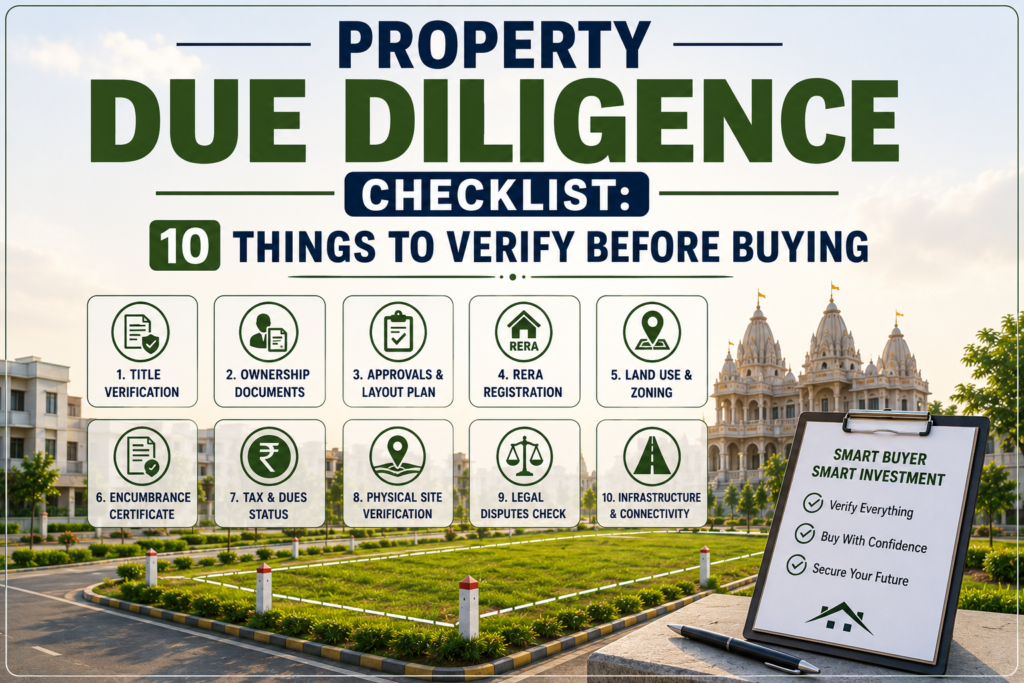
Buying a property is a major financial decision. A good location and attractive price are important, but buyers should also verify the property’s legal, financial, and physical details before completing the transaction.
Following a property due diligence checklist can help identify potential issues early and make the purchasing process more informed.
1. Verify the Seller’s Identity
Before proceeding with the transaction, confirm that the person selling the property matches the ownership documents.
Check:
- Identity documents
- Name on title records
- Ownership documents
- Authority to sell, where applicable
2. Check the Title Documents
Review the property’s title documents to understand the ownership history.
If there have been multiple previous transfers, examine the relevant previous documents as well.
3. Obtain an Encumbrance Certificate
An Encumbrance Certificate can help identify registered transactions and certain recorded encumbrances associated with the property for a specified period.
It should be reviewed alongside other legal documents.
4. Verify Property Approvals
Depending on the type and location of the property, check applicable approvals and permissions.
These may include:
- Approved layout
- Building plan approval
- Development permissions
- Applicable project registrations
5. Check Property Tax Records
Review property tax records and receipts to determine whether applicable taxes have been paid and whether the records correspond with the property.
6. Verify the Actual Property Details
Compare the documents with the physical property.
Check:
- Plot number
- Property boundaries
- Area
- Dimensions
- Access road
- Location
Any mismatch should be investigated before proceeding.
7. Check for Existing Loans or Claims
Ask whether the property is subject to:
- Mortgage
- Bank loan
- Court-related restrictions
- Registered claims
- Other financial interests
Relevant records should be verified through appropriate authorities and professionals.
8. Inspect Infrastructure
For plots and residential properties, physically inspect:
- Roads
- Water supply
- Electricity
- Drainage
- Street lighting
- Parking, where applicable
Do not rely exclusively on advertisements or verbal statements.
9. Review the Sale Agreement Carefully
Before signing, read the agreement carefully and verify:
- Purchase price
- Payment schedule
- Possession terms
- Registration details
- Cancellation conditions
- Responsibilities of both parties
For significant transactions, professional legal review can be valuable.
10. Get Professional Verification
Property laws and documentation requirements can vary by state and property type.
If you are unsure about ownership, approvals, title history, or contractual terms, consider having the documents reviewed by a qualified property lawyer.
Property Due Diligence Checklist
| Check | Why It Matters |
|---|
| Seller identity | Confirms the person selling |
| Title documents | Reviews ownership |
| Encumbrance Certificate | Reviews registered encumbrances |
| Approvals | Confirms applicable permissions |
| Tax records | Checks tax-related records |
| Property measurements | Confirms physical details |
| Loans/claims | Identifies potential financial issues |
| Infrastructure | Verifies actual facilities |
| Sale Agreement | Defines transaction terms |
| Legal review | Helps identify complex issues |
Common Mistakes Buyers Make
Making a Token Payment Too Early
Avoid making significant payments before basic ownership and document checks.
Relying Only on the Broker
Information provided by an agent should be independently verified through documents and relevant authorities.
Skipping the Site Visit
Always inspect the property and surrounding area personally.
Ignoring Small Document Differences
Differences in names, measurements, plot numbers, or addresses should be clarified before registration.
Conclusion
A property due diligence checklist helps buyers approach real estate purchases systematically. From verifying ownership and title documents to checking approvals, taxes, encumbrances, and physical property details, each step contributes to a more informed transaction.
Before purchasing any property, take the time to verify the documents and seek qualified professional advice wherever necessary.