
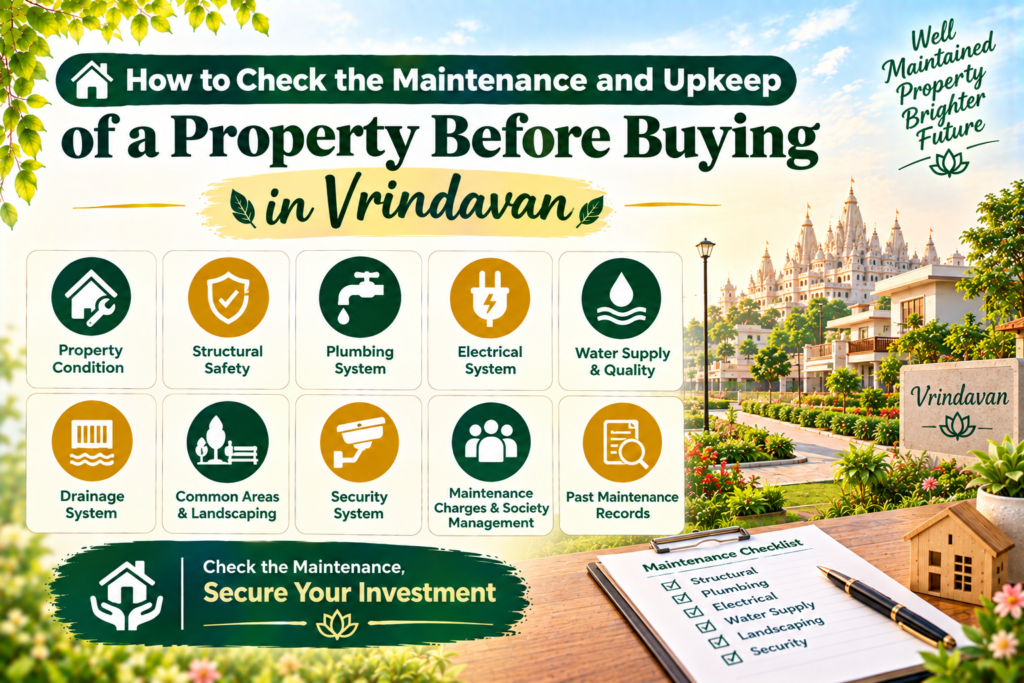
Buying a property is not only about the purchase price. Buyers should also understand how much effort and expense may be required to maintain the property after the purchase.
This is particularly important when buying a property in Vrindavan for a second home, rental use, occasional visits, or long-term residential purposes. A property that appears attractive during the initial visit may require regular maintenance, repairs, security arrangements, or other ongoing expenses.
If you are planning to buy property in Vrindavan, checking the property’s current condition and future maintenance requirements can help you plan your overall budget more effectively.
1. Inspect the Property’s Current Condition
Start by checking the physical condition of the property.
For a ready property, inspect:
- Walls and ceilings
- Flooring
- Doors and windows
- Plumbing fixtures
- Electrical fittings
- Kitchen
- Bathrooms
- Roof and terrace
- Drainage points
- Paint and exterior surfaces
For a new property, ask about the construction specifications, maintenance arrangements and applicable warranties.
Identifying existing issues before purchase can help you understand whether additional repair expenses may be required.
2. Ask About Regular Maintenance Costs
Different properties have different maintenance requirements.
Before buying, ask about recurring expenses such as:
- Society maintenance charges
- Common-area maintenance
- Security charges
- Lift maintenance
- Cleaning
- Landscaping
- Water-related charges
- Electricity for common areas
- Waste management
If you are considering an apartment, gated community or other managed property, ask for the current maintenance structure in writing where possible.
3. Check Common Areas and Facilities
For properties located within a residential society or managed development, do not inspect only the individual property.
Also look at common facilities such as:
- Internal roads
- Parking areas
- Entrance gates
- Security facilities
- Staircases
- Lifts
- Parks
- Drainage
- Street lighting
- Community areas
The condition of these facilities can give you an idea of the property’s overall upkeep.
4. Understand Who Handles Maintenance
Ask who is responsible for maintaining different parts of the property.
For example:
- Who maintains common areas?
- Who handles security?
- Who manages waste collection?
- Who takes care of landscaping?
- Who repairs common electrical systems?
- Who handles plumbing problems?
- Who manages the society or property?
Clear responsibility can make property ownership easier after purchase.
5. Check the Property If It Has Been Vacant
Some properties in Vrindavan may be used as second homes or remain vacant for extended periods.
If the property has been unoccupied, check for:
- Dust and moisture
- Plumbing problems
- Electrical issues
- Pest activity
- Leakage
- Damaged fittings
- Paint deterioration
- Security concerns
A property that remains closed for long periods may require additional attention before regular use.
6. Consider Water and Plumbing Maintenance
Water-related issues can create significant inconvenience if they are not identified early.
Check:
- Water supply
- Water pressure
- Storage tanks
- Plumbing lines
- Bathroom fittings
- Drainage
- Leakage
- Water seepage
Ask whether the property has experienced any previous plumbing or water-related problems.
7. Inspect Electrical Systems
Electrical systems should also be checked before purchasing a ready property.
Look at:
- Switches
- Sockets
- Lighting
- Electrical panels
- Wiring condition
- Backup power arrangements
- Common-area electricity
If you notice problems or if the property’s electrical condition is unclear, consider having it inspected by a qualified professional.
8. Check for Seepage and Dampness
Seepage and dampness can become expensive problems if ignored.
During your inspection, look for:
- Damp patches
- Discoloration
- Peeling paint
- Ceiling marks
- Moisture around bathrooms
- Signs of water leakage
- Cracks near windows or walls
Do not assume that a fresh coat of paint has permanently solved a moisture-related issue. Ask about the underlying cause where necessary.
9. Understand Society Rules and Charges
If you are purchasing a property in a residential society, ask for information about the society’s rules and maintenance structure.
Find out:
- Monthly maintenance charges
- Parking rules
- Common-area usage
- Repair responsibilities
- Security arrangements
- Maintenance payment process
- Any applicable additional charges
Understanding these details before purchasing can prevent surprises later.
10. Consider Security and Property Monitoring
Security can be particularly important if the property will not be occupied throughout the year.
Ask about:
- Security guards
- Entry gates
- CCTV
- Visitor management
- Lighting
- Security of vacant properties
If you are purchasing a second home, also consider who will inspect the property when you are away.
11. Think About Maintenance If You Plan to Rent the Property
Buyers planning to generate rental income should include maintenance in their calculations.
Possible expenses can include:
- Regular repairs
- Painting
- Plumbing
- Electrical work
- Cleaning
- Appliance maintenance
- Common-area charges
- Property management
- Tenant-related repairs
A realistic estimate of these expenses can help you understand the overall cost of owning a rental property.
12. Check the Age of the Property
For an existing property, age can influence maintenance requirements.
Ask:
- When was the property constructed?
- When were major repairs completed?
- Has the property been renovated?
- Are major systems original?
- Is there any upcoming repair work?
Older properties are not necessarily unsuitable, but buyers should understand their likely maintenance requirements.
13. Check the Condition of External Areas
The outside of the property also requires attention.
Inspect:
- Exterior walls
- Boundary walls
- Gates
- Driveways
- Parking areas
- Roof
- Drainage
- Landscaping
For independent houses, villas and similar properties, external maintenance can form a significant part of long-term upkeep.
14. Ask About Previous Repairs
A property’s maintenance history can provide useful information.
Ask the seller or property manager whether there have been previous issues involving:
- Water leakage
- Structural repairs
- Plumbing
- Electrical systems
- Roofing
- Pest control
- Painting
- Drainage
Where possible, ask for supporting records or bills for major repairs.
15. Calculate the Long-Term Maintenance Budget
Before buying, create an estimated annual maintenance budget.
You can divide expenses into:
Regular Expenses
- Society charges
- Cleaning
- Security
- Utilities
- Routine repairs
Occasional Expenses
- Painting
- Plumbing replacement
- Electrical repairs
- Waterproofing
- Appliance replacement
- Major renovation
This approach can help you understand the actual cost of owning the property beyond the purchase price.
16. Consider the Property’s Intended Use
Maintenance requirements depend partly on how you plan to use the property.
For example:
Permanent residence:
Daily maintenance and utility expenses may be more predictable.
Second home:
Security, cleaning and periodic inspections become more important.
Rental property:
Tenant management, repairs and property management expenses should be considered.
Investment property:
The focus may be on preserving the property’s condition and controlling recurring costs.
Understanding your intended use can help you estimate the right maintenance budget.
17. Get Professional Inspection When Necessary
If you are buying an expensive ready property or an older building, consider getting the property inspected by appropriate professionals.
Depending on the property, professional checks may help identify:
- Structural concerns
- Electrical problems
- Plumbing issues
- Waterproofing problems
- Construction defects
Professional inspection can be particularly useful when potential repair costs are significant.
18. Compare Maintenance Before Choosing Between Properties
If you are comparing multiple properties in Vrindavan, do not compare only their purchase prices.
Also compare:
| Factor | Property A | Property B |
|---|---|---|
| Purchase price | ||
| Monthly maintenance | ||
| Current condition | ||
| Repair requirements | ||
| Security | ||
| Common facilities | ||
| Property age | ||
| Expected annual upkeep |
This gives you a more complete picture of the cost of ownership.
Conclusion
Checking property maintenance in Vrindavan before buying can help you understand the ongoing responsibilities and expenses associated with property ownership.
Buyers should inspect the property’s condition, understand maintenance charges, check common facilities, review plumbing and electrical systems, look for seepage, evaluate security, and consider future repair requirements.
Whether you are buying a permanent home, second home, rental property, or another type of residential property, maintenance should be considered as part of the overall purchase decision.
A detailed property inspection and clear understanding of recurring costs can help you plan your ownership expenses more effectively.