
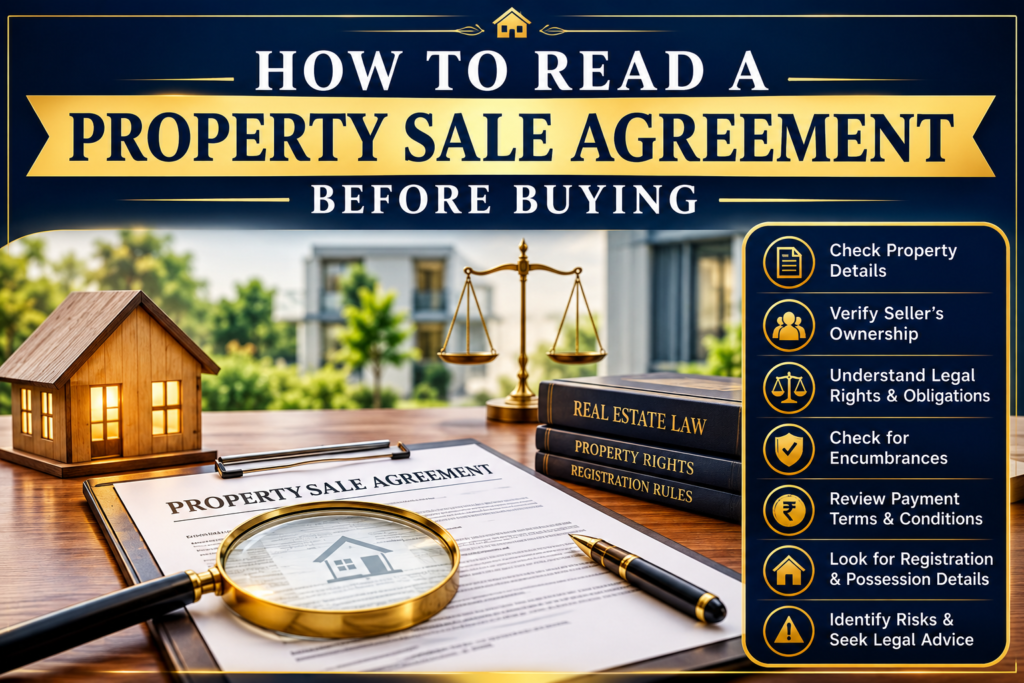
A property sale agreement is an important document that records the terms and conditions agreed between a buyer and seller before completion of the property transaction. It can cover the property’s details, purchase price, payment schedule, possession terms, and responsibilities of both parties.
Buyers should read the agreement carefully instead of signing it without understanding its clauses.
1. Verify the Property Details
The agreement should clearly identify the property being purchased.
Check:
- Property address
- Plot or unit number
- Area
- Boundaries
- Floor or unit details, where applicable
- Parking details, if included
The information should match the property’s official documents.
2. Check the Total Purchase Price
Make sure the agreement clearly mentions the agreed purchase price.
Also check whether additional amounts are payable for:
- Registration
- Stamp duty
- Development charges
- Maintenance
- Utilities
- Other applicable expenses
Understanding the complete financial obligation can prevent confusion later.
3. Understand the Payment Schedule
The agreement should clearly explain when and how payments are to be made.
Check:
- Advance payment
- Instalment amounts
- Due dates
- Final payment
- Payment method
Avoid relying on verbal promises that are not reflected in the written agreement.
4. Read the Possession Clause
If the property is under construction or possession is scheduled for a later date, carefully review the possession terms.
Check:
- Expected possession date
- Conditions for handover
- Responsibilities before possession
- Consequences of delay, where applicable
5. Check Cancellation and Refund Terms
Pay particular attention to what happens if either party fails to complete the transaction.
The agreement may specify:
- Cancellation conditions
- Refund terms
- Forfeiture of advance
- Compensation or other consequences
These clauses should be understood before signing.
6. Verify Ownership and Legal Information
The agreement should not be treated as a substitute for title verification.
Buyers should independently check relevant documents such as:
- Title documents
- Sale Deed
- Encumbrance records
- Approved layout
- Applicable approvals
- Property tax records
7. Understand the Seller’s Responsibilities
The agreement should clearly state what the seller or developer is responsible for completing.
Depending on the property, this could include:
- Construction
- Infrastructure
- Documentation
- Handover
- Utility connections
8. Check Every Annexure
Important information may be included in annexures or schedules attached to the agreement.
Read all attachments carefully, including:
- Site plans
- Payment schedules
- Specifications
- Layout plans
- Property schedules
Common Mistakes Buyers Make
Signing Without Reading
Never sign an agreement simply because the seller or broker says it is a standard document.
Ignoring Small Clauses
Payment, cancellation, possession, and liability clauses can have significant consequences.
Relying on Verbal Commitments
If an important promise is part of the deal, make sure it is properly documented.
Not Seeking Legal Advice
For a significant property purchase, having the agreement reviewed by a qualified property lawyer can help identify unclear or unfavorable terms.
Property Sale Agreement Checklist
| Clause | What to Check |
|---|
| Property details | Address, area, boundaries |
| Purchase price | Total agreed amount |
| Payment terms | Instalments and due dates |
| Possession | Handover conditions |
| Cancellation | Refund and penalties |
| Seller obligations | Required work and documents |
| Buyer obligations | Payments and compliance |
| Annexures | Plans and schedules |
| Registration | Applicable requirements |
Conclusion
A property sale agreement is an important part of the property purchase process. Buyers should carefully verify the property details, purchase price, payment schedule, possession terms, cancellation conditions, and responsibilities of both parties.
Before signing, compare the agreement with the property’s official documents and consider professional legal advice for any clause you do not fully understand.