
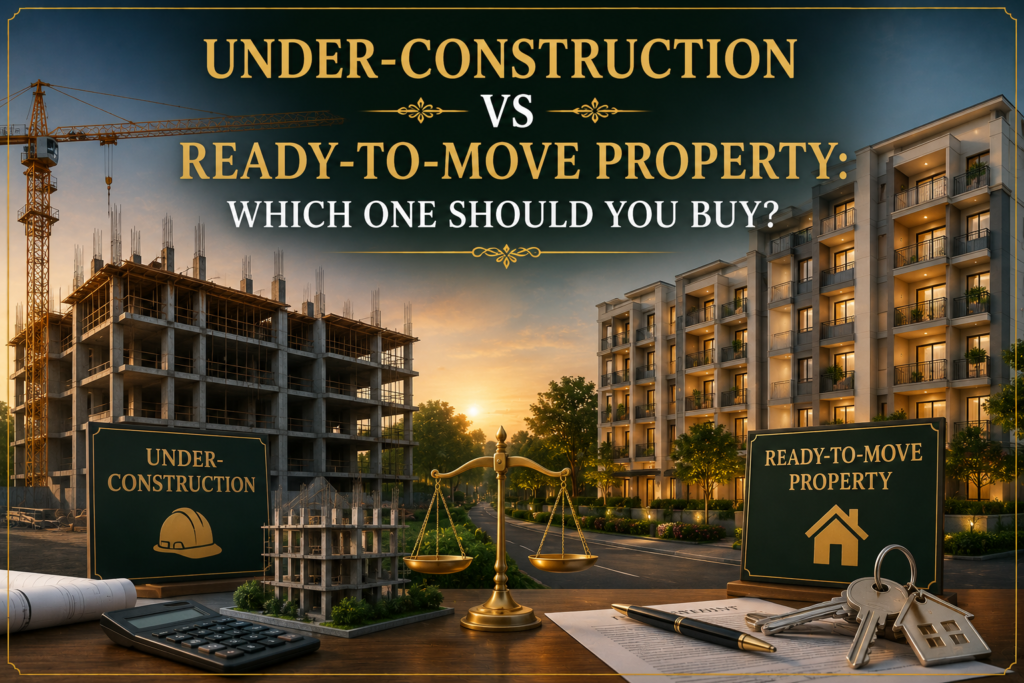
One of the biggest decisions homebuyers face is whether to purchase an under-construction property or a ready-to-move home. Both options have advantages and limitations, and the right choice depends on your budget, timeline, and investment goals.
Let’s compare the two to help you make an informed decision.
What is an Under-Construction Property?
An under-construction property is a project that is still being developed and has not yet been completed.
Benefits
- Lower initial purchase cost
- Flexible payment plans
- Potential appreciation before project completion
- Wider choice of units during early stages
Challenges
- Construction delays may occur
- Possession timelines can change
- Buyers need to evaluate developer credibility carefully
What is a Ready-to-Move Property?
A ready-to-move property is fully completed and available for immediate possession.
Benefits
- Immediate occupancy
- No construction uncertainty
- Buyers can physically inspect the property
- Easier assessment of neighborhood and facilities
Challenges
- Higher upfront cost in some cases
- Limited unit selection
- Lower scope for early-stage appreciation
Comparison Table
| Factor | Under-Construction | Ready-to-Move |
|---|---|---|
| Possession | Future date | Immediate |
| Initial Cost | Often lower | Often higher |
| Inspection | Limited | Full inspection possible |
| Appreciation Potential | May increase before completion | Depends on market conditions |
| Risk Level | Generally higher | Generally lower |
Who Should Choose Under-Construction Property?
Under-construction projects may suit:
- Long-term investors
- Buyers not needing immediate possession
- Individuals comfortable with project timelines
Who Should Choose Ready-to-Move Property?
Ready-to-move homes may suit:
- Families needing immediate accommodation
- Buyers seeking certainty
- Individuals who prefer physical verification before purchase
Important Checks Before Buying
For Under-Construction Properties
- Project approvals
- Developer track record
- Construction progress
- Payment schedule
For Ready-to-Move Properties
- Ownership records
- Completion documentation
- Property condition
- Maintenance arrangements
Common Mistakes Buyers Make
- Choosing only based on price
- Ignoring documentation
- Not researching the developer
- Failing to assess long-term requirements
Conclusion
Both under-construction and ready-to-move properties have unique advantages. Buyers should evaluate their financial goals, possession requirements, and risk tolerance before making a decision. Careful research and document verification remain essential regardless of the option chosen.