
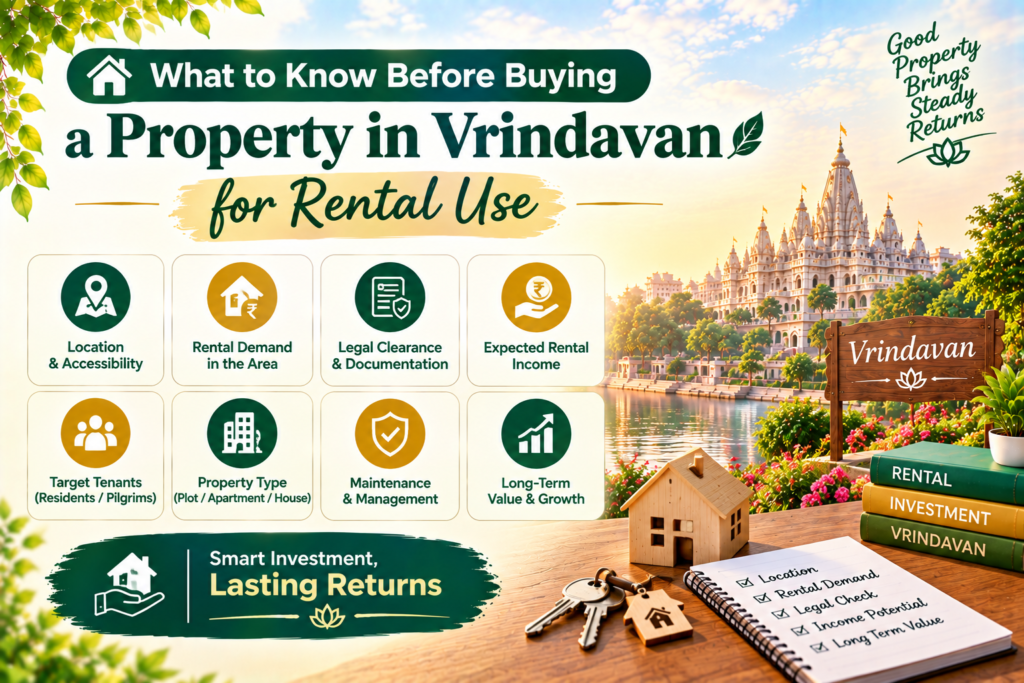
Vrindavan has become an important destination for people looking for a property that can be used for personal stays as well as rental purposes. For buyers considering a rental property in Vrindavan, the decision should go beyond simply finding a property in a popular location.
Rental performance can depend on factors such as location, property type, accessibility, nearby facilities, maintenance requirements, and the type of tenants or visitors the property is likely to attract.
Before buying, it is important to evaluate the property from both an ownership and rental-use perspective.
Why Consider a Rental Property in Vrindavan?
A property purchased for rental use can serve different purposes. Some owners may want regular rental income, while others may plan to use the property themselves for part of the year and rent it out when they are away.
Vrindavan attracts visitors throughout the year because of its religious and cultural importance. This creates opportunities for different types of rental properties, including apartments, independent homes, and other residential properties.
However, rental demand can vary by location, season, property type, and tenant requirements. Buyers should therefore evaluate the actual rental potential of a property instead of assuming that every property will generate the same income.
1. Choose the Property Type Carefully
The type of property you purchase can directly affect its potential rental audience.
Depending on the location and property configuration, buyers may consider:
- Apartments
- Independent houses
- Residential units
- Builder floors
- Properties suitable for longer stays
- Properties that can accommodate families
Before making a decision, consider who you want to rent the property to and what type of accommodation they are likely to prefer.
A compact property may suit individuals or couples, while a larger property may be more suitable for families or groups.
2. Location Is Important for Rental Demand
Location is one of the most important factors when evaluating a rental property in Vrindavan.
Tenants and visitors generally consider accessibility, nearby roads, local facilities, markets, temples, transportation, and the overall surroundings when selecting accommodation.
When comparing locations, check:
- Road connectivity
- Access to major areas of Vrindavan
- Nearby markets and daily-use facilities
- Availability of transportation
- Distance from important religious and visitor destinations
- Development around the property
- Approach road and accessibility
A property that is convenient to reach and well connected may have a broader potential rental audience.
3. Understand Your Target Tenant
Before buying, decide what type of rental demand you are targeting.
Your potential tenants could include:
- Families visiting Vrindavan
- People staying for several weeks or months
- Working professionals
- Senior citizens
- Devotees planning extended stays
- People looking for a second-home-style rental
Each group may have different expectations.
For example, families may value multiple bedrooms, parking, kitchens, and nearby facilities. Longer-stay tenants may give more importance to accessibility, maintenance, and everyday convenience.
Understanding the target tenant can help you choose a property that matches actual requirements.
4. Check the Property’s Accessibility
Accessibility can influence whether people are interested in renting a property.
Before purchasing, visit the property personally and check:
- Main road access
- Internal road condition
- Parking availability
- Entry and exit convenience
- Public transportation options
- Accessibility during busy periods
- Distance from everyday facilities
Do not evaluate accessibility only by looking at a map. A physical visit can reveal road conditions, traffic patterns, surrounding development, and other practical factors.
5. Calculate the Total Cost of Ownership
The purchase price is not the only expense involved in owning a rental property.
Your overall cost may include:
- Property purchase price
- Registration and applicable government charges
- Maintenance expenses
- Society or community charges, where applicable
- Property repairs
- Utility-related expenses
- Furnishing costs
- Property management expenses
- Vacancy periods
Understanding these costs before purchasing can help you set realistic expectations about rental income.
6. Estimate Rental Income Realistically
Avoid deciding on a property only because someone gives you an attractive rental-income estimate.
Before buying, research comparable properties in the same or similar locality.
Compare:
- Property size
- Number of bedrooms
- Furnishing level
- Location
- Amenities
- Parking
- Building condition
- Rental asking prices
- Actual availability of similar properties
Rental asking prices and actual achieved rents may be different. Therefore, use multiple comparable properties when forming your estimate.
7. Consider Vacancy Periods
A rental property may not remain occupied throughout the year.
There can be periods when the property remains vacant because of:
- Seasonal changes
- Tenant turnover
- Maintenance work
- Local rental supply
- Changes in tenant demand
- Property-specific limitations
When calculating potential rental returns, consider possible vacancy periods instead of assuming 12 months of continuous occupancy.
8. Think About Maintenance and Management
Managing a rental property from another city can sometimes be challenging.
Regular responsibilities may include:
- Finding tenants
- Property inspections
- Repairs
- Cleaning
- Utility coordination
- Rent collection
- Tenant communication
- Periodic maintenance
If you do not live nearby, consider how these activities will be handled.
A reliable local property management arrangement can make ownership easier, but it may also add to your expenses.
9. Check Documents Before Buying
Legal and document verification should be completed before purchasing any property.
Depending on the property type, buyers may need to verify relevant documents such as:
- Ownership documents
- Sale deed
- Previous transaction records
- Approved layout or applicable approvals
- Property-related permissions
- Tax or payment records
- Encumbrance-related information
- Identity and transaction documents
The exact documents required can vary according to the property and transaction.
It is advisable to have the documents reviewed by a qualified property lawyer or other appropriate professional before completing the purchase.
10. Check the Surrounding Development
The area around a rental property can affect its practicality.
Look for:
- Residential development
- Shops and markets
- Roads
- Healthcare facilities
- Educational facilities where relevant
- Public transportation
- Parking
- Water and electricity availability
- General cleanliness and accessibility
A property may look attractive on paper, but the surrounding area should also work for the people who are expected to rent it.
11. Decide Between Long-Term and Short-Term Rental Use
Before buying, understand what rental model you intend to follow.
Long-Term Rental
Long-term rentals may involve tenants staying for several months or longer.
Potential advantages include:
- More predictable occupancy
- Less frequent tenant turnover
- Lower management involvement
However, rental rates and tenant demand depend on the specific property and location.
Short-Term Rental
Short-term accommodation can target visitors staying for shorter periods.
This model may require:
- More frequent cleaning
- More tenant communication
- Higher management involvement
- Regular maintenance
- Careful compliance with applicable local rules
The suitable rental model depends on the property, location, target audience, and owner’s ability to manage the property.
12. Compare Multiple Properties Before Deciding
Do not make a purchase decision after visiting only one property.
Create a simple comparison based on:
| Factor | Property A | Property B | Property C |
|---|---|---|---|
| Purchase Price | |||
| Property Size | |||
| Location | |||
| Road Access | |||
| Parking | |||
| Amenities | |||
| Estimated Rental Demand | |||
| Maintenance Cost | |||
| Documentation |
This makes it easier to compare properties objectively and identify differences that may not be obvious during a single visit.
Is Buying a Rental Property in Vrindavan Right for You?
A rental property in Vrindavan can be considered by buyers who want to combine property ownership with potential rental use. However, rental income is not guaranteed, and the actual performance of a property depends on several factors.
Before purchasing, evaluate the location, property type, target tenant, total ownership cost, rental demand, vacancy possibility, maintenance requirements, and legal documentation.
The right approach is to treat rental potential as one part of the property-buying decision rather than the only reason to purchase.
Final Thoughts
Buying property for rental use requires careful planning. In Vrindavan, buyers should pay particular attention to accessibility, surrounding development, property type, tenant requirements, and ongoing management.
If you are planning to buy property in Vrindavan, compare multiple options, verify the documents, understand the complete cost of ownership, and research comparable rental properties before making a final decision.
For buyers exploring different property in Vrindavan options, PropertyGuru4U can help you understand available choices and evaluate properties according to your requirements.